现实转插画转场杂志海报设计
现实转插画转场杂志海报设计,适合短视频封面、AI生图、AI视频分镜和内容创作参考。模型:Nano Banana 2。
AI提示词短视频灵感
现实转插画转场杂志海报设计,适合短视频封面、AI生图、AI视频分镜和内容创作参考。模型:Nano Banana 2。
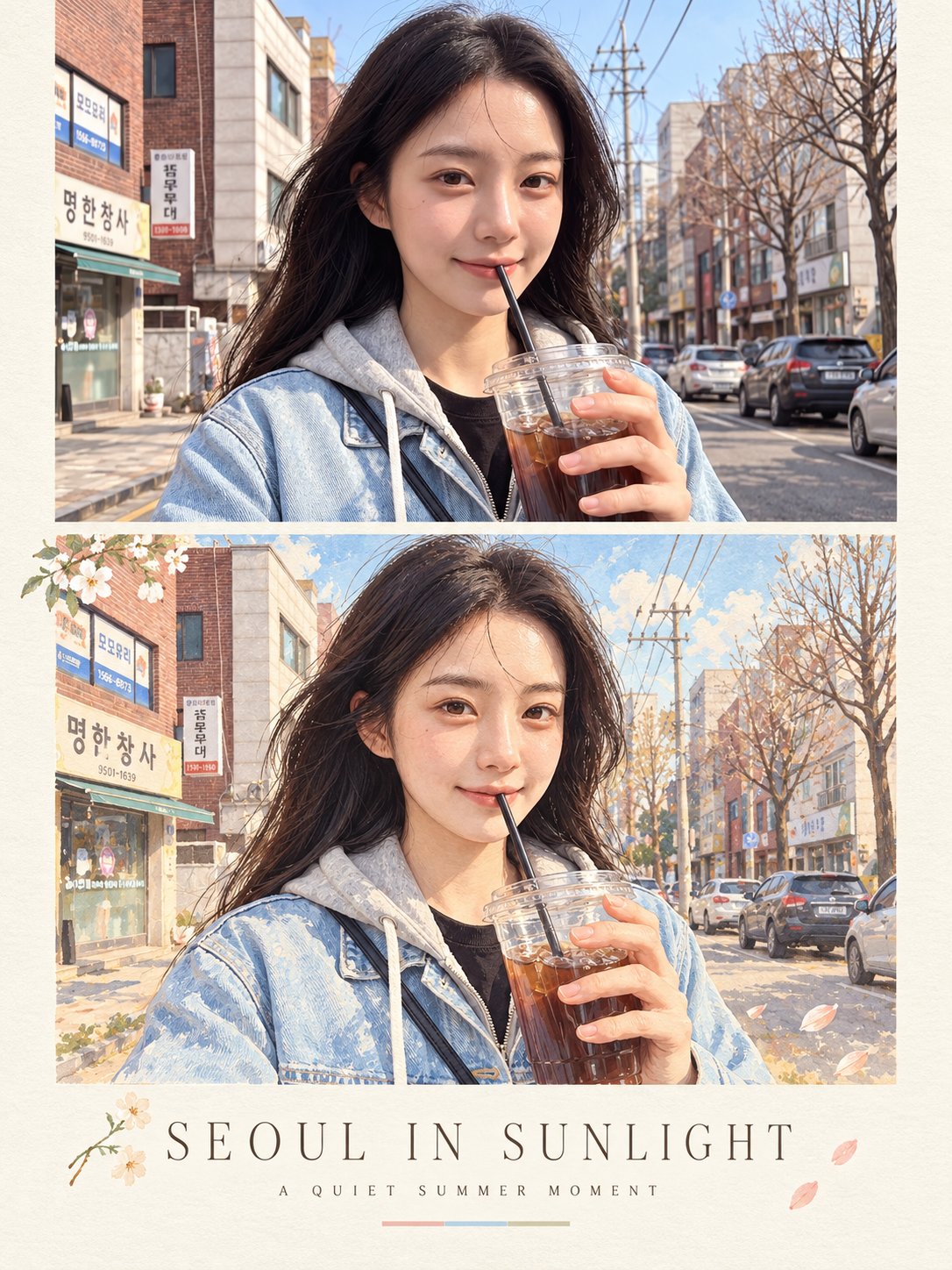
图片来自公开来源,仅作提示词效果参考;正式商用请按来源授权处理。
Design a sophisticated vertical magazine-style poster built around a seamless transition from reality to illustration. At the top, present the subject as a highly realistic lifestyle photograph, naturally placed within the original environment. Use soft golden sunlight, lifelike skin and hair details, subtle facial expression, natural shadows, and a shallow cinematic focus for an authentic photographic feel.

Directly beneath it, reinterpret the very same moment as a refined hand-painted artwork. Keep the character instantly recognizable by matching the original composition, body position, hairstyle, outfit, smartphone, lighting direction, and surrounding environment. Give the artwork a gentle painterly finish with visible brushwork, soft edges, organic forms, muted pastel tones, and a nostalgic illustrated-magazine atmosphere.

Arrange both scenes within a carefully designed editorial layout surrounded by warm cream-colored paper with subtle grain and tactile print texture. Add a few delicate botanical or seasonal accents around the artwork without overwhelming the composition.

Under the illustrated panel, create a clean typography section with a centered uppercase headline: “[MAIN TITLE]”. Use elegant, widely tracked lettering with a refined fashion-editorial feel. Beneath it, place “[TAGLINE]” in a smaller, understated typeface with generous spacing. Finish the typography area with one short horizontal pastel accent rule.

Keep the entire composition calm, premium, and visually cohesive. The photographic and illustrated versions should feel like two interpretations of the exact same moment rather than separate scenes.

Use a vertical 3:4 poster format, high-resolution output, balanced negative space, soft natural color grading, polished print aesthetics, and contemporary editorial art direction.

Do not introduce unnecessary text, dramatic borders, oversaturated colors, visual clutter, unrealistic anatomy, mismatched facial features, or changes to the subject’s identity and clothing.