真实影像与东方极简纸雕压印双拼海报
真实影像与东方极简纸雕压印双拼海报,适合短视频封面、AI生图、AI视频分镜和内容创作参考。模型:ChatGPT。
AI提示词短视频灵感
真实影像与东方极简纸雕压印双拼海报,适合短视频封面、AI生图、AI视频分镜和内容创作参考。模型:ChatGPT。
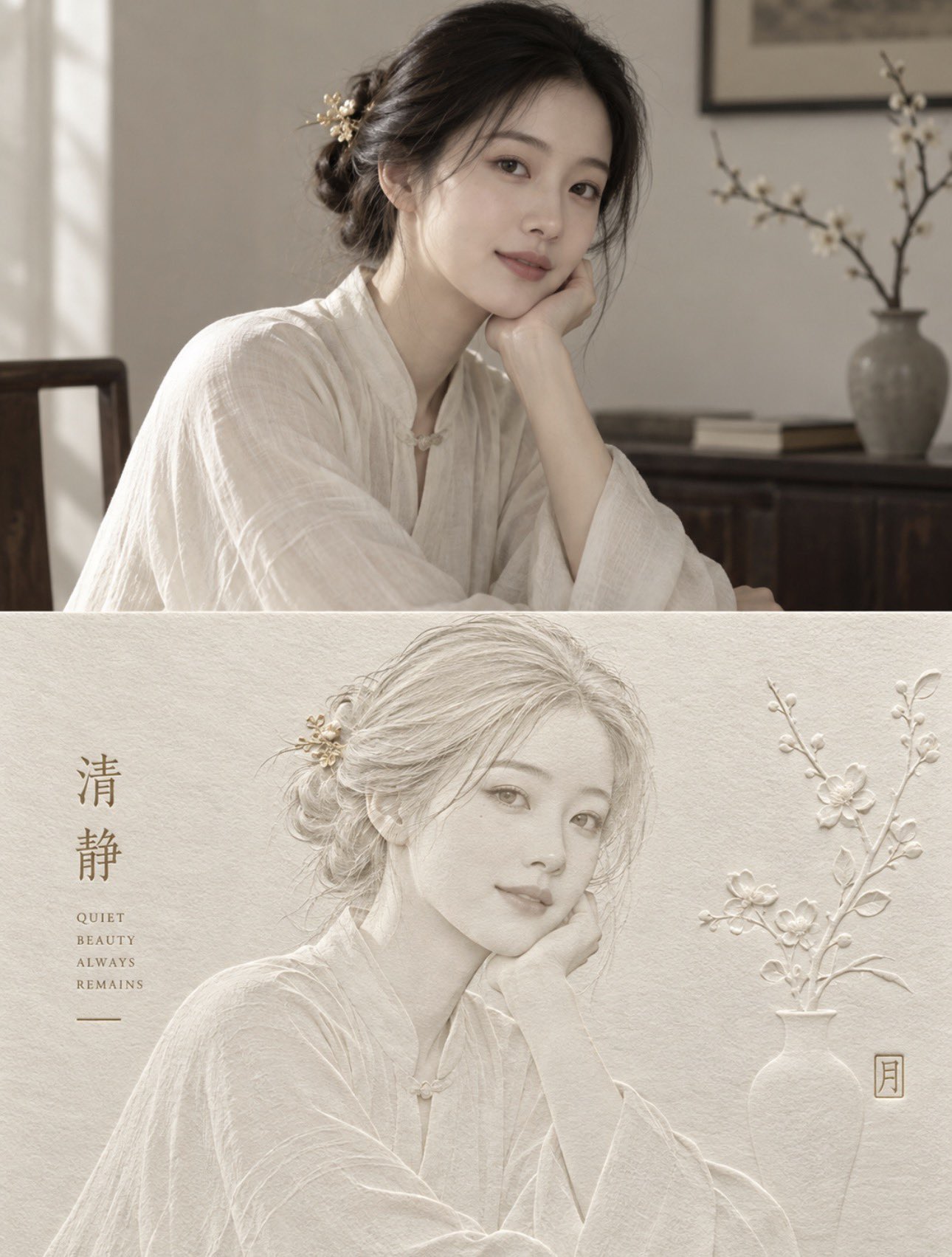
图片来自公开来源,仅作提示词效果参考;正式商用请按来源授权处理。
Create a vertical split-frame visual work. The upper part displays the real person, pet, animal, or subject photo uploaded by the user; the lower part takes the same subject as the core and reconstructs it into an Oriental minimalist art image with the texture of Chinese embossed relief / paper carving. The upper and lower parts form a very restrained and high-end "real image × Oriental paper sculpture" contrast. Upper Part | User Uploaded Original Image: Keep the original photographic photo completely intact at the top. Prioritize maintaining the subject of people, pets, animals, multi-person interaction, or human-pet interaction. People need to retain their face shape, facial features, hairstyle, skin tone, clothing, accessories, posture, and interaction relationships. Pets or animals need to retain breed characteristics, face shape, ears, fur color, patterns, body proportions, tails, postures, and movements. Do not turn the upper photo into a white relief or illustration. Reasonable cropping is allowed to adapt to the vertical composition, but the identity of the subject must not be changed. Buildings and environments only exist as photo backgrounds; unless their contours have a clear relationship with the character's actions, they are not used as the main reconstruction content for the lower part. Lower Part | Oriental Golden Embossed Relief Translation: Extract the most recognizable subject, outline, posture, and narrative relationship from the upper photo, and reconstruct it into a minimalist art poster with the texture of Chinese embossed relief / paper carving. The whole appears as if embossed on heavy milky white paper, re-summarizing the subject with low relief, delicate shadows, minimalist line carving, and restrained layers. Do not mechanically replicate all details of the photo, but instead retain the most core structural features and spatial relationships, so that people can recognize at a glance that the bottom is the same person, animal, or group of subjects as the original image at the top. The human face does not need to be made into a realistic statue, but the face shape, hairstyle outline, clothing structure, body posture, and movements must correspond with the top. Pets need to focus on retaining identification information such as ears, facial proportions, the structure formed by fur color divisions, body posture, and tails, and re-express them through relief levels and line carvings. Depending on the type of subject, it can be transformed into a low-relief composition of front view, slight high-angle view, partial top-down view, or axial extension. Moderately retain a small amount of environmental outlines or props truly related to the subject, such as a chair, a book, a bouquet of flowers, pet toys, etc., giving the image clear primary and secondary order, depth, and a museum-exhibition-like sense of tranquility. Do not mechanically carve the complete architectural background from the top into the bottom. The overall base is a large area of milky white, warm white, or light paper color white space. The subject and related elements are presented uniformly in low relief of the same color system, establishing layers through embossed height differences, edge shadows, and subtle light and dark. The relief must present a real heavy paper embossed texture: delicate paper fibers, clean edges, shallow indentations, soft natural shadows; do not make it look like a plaster sculpture, ceramic, or computer 3D model. A small amount of matte gold details and soft warm white light can be added only at the most critical local structures or visual focus points of the subject to strengthen the core identification points. The use of gold must be very restrained. For example, a hair accessory of a person, clothing lines, props in hand, pet collars, tiny structures in the direction of the gaze, outline nodes, or movement relationships can use matte gold embossing. Do not paint the entire subject gold. Avoid messy colors, excessive decoration, and piling up scenes. Text needs to be transformed into a part of the image structure, rather than a common title description. Extract short text from the subject's identity, thematic temperament, action state, emotion, or symbolic meaning of the photo. Titles + keywords + a small amount of numbering, tiny notes, or philosophical short sentences can be used. If there is no clear location, do not force the inclusion of fictional locations. The text uses restrained gold or dark grey serif / high-end editorial fonts, which can be placed on the central axis, below the subject, on the edge of the white space, or aligned with the relief structure, making it form a sense of order and exhibition poster temperament together with the embossed subject, rather than an information layer pasted on later. The overall style pursues high-end, quiet, minimalist, restrained, Oriental aesthetics, museum poster feel, and paper sculpture feel. The lower part should have a very obvious collection-grade paper art work temperament. After combining the top and bottom, viewers can first see the real person or animal, and then see its most core outline, posture, and emotion refined into a quiet Oriental embossed relief below. Avoid garbled text, low resolution, deformed subjects, messy colors, crowded composition, cheap 3D feel, and template feel. Prohibition of making characters into completely strange statue faces. Prohibition of changing the key outlines and movements of pets. Prohibition of complex buildings snatching the lower subject.