极简光影错位海报设计
极简光影错位海报设计,适合短视频封面、AI生图、AI视频分镜和内容创作参考。模型:ChatGPT。
AI提示词短视频灵感
极简光影错位海报设计,适合短视频封面、AI生图、AI视频分镜和内容创作参考。模型:ChatGPT。
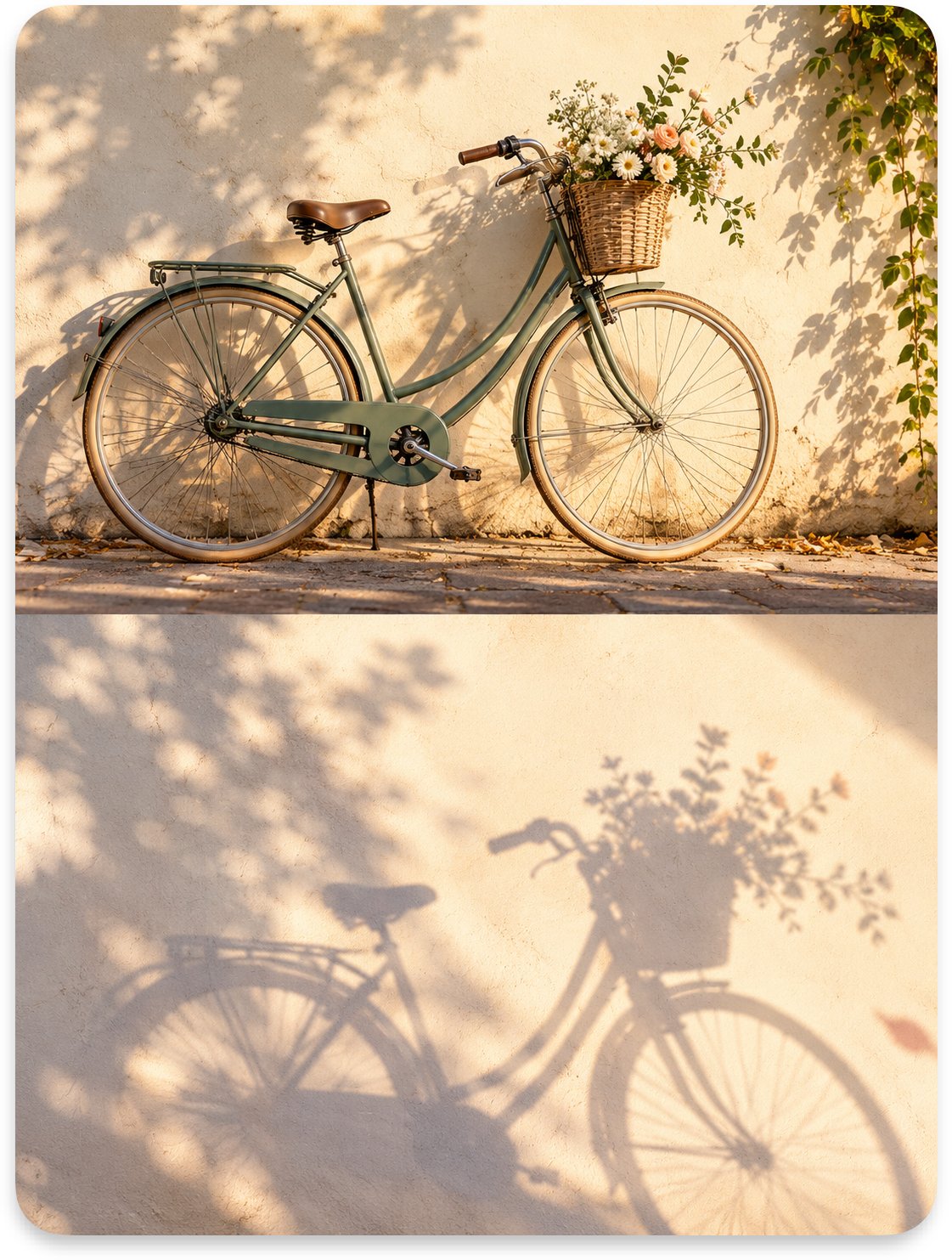
图片来自公开来源,仅作提示词效果参考;正式商用请按来源授权处理。
Please create a separate high-end design poster for each photo I upload, rather than stitching multiple images together; each photo should be output individually. The overall composition uses a 3:4 vertical layout, with the top and bottom regions strictly in a 1:1 ratio, each occupying 50% of the frame. The upper half preserves the original photo, maintaining the subject's identity, structure, posture, realistic texture, natural lighting, and original color atmosphere, with only slight high-end color grading to give it the quality of artistic photography and an independent publication. To adapt to the frame, the background environment may be naturally extended, but the subject must not be stretched, distorted, or changed. The lower half does not feature any physical subjects, only presenting the shadow of the subject cast on a quiet white wall or light-colored paper surface under afternoon sunlight. Extract the most recognizable silhouette, posture, structural trends, and narrative relationships from the photo, and transform them into an elongated, slightly deformed projection with soft edges, allowing viewers to recognize the object in the photo above at a glance just by the shadow. This is a reverse reconstruction of drawing only the shadow, not the object. A small amount of natural light and shadow elements can be superimposed in the shadow, such as light spots leaking through the gaps in leaves (komorebi), slanted shadows of window frames, the soft light of sheer curtains, or the flickering light patterns reflected from water, intertwining the shadow of the subject with the light of the environment like a daily miracle glimpsed by chance. A tiny 'displaced detail' can be kept in the shadow—the shadow is slightly different from the original object, with an extra flower, a missing part, or a slightly changed posture—bringing quiet poetry and a knowing smile. The texture emphasizes a sense of realistic light and shadow photography: the subtle texture of the white wall or paper, light particles like dust, the soft transition of the penumbra, and the natural blurring of light spot edges. The shadow is not a pure black silhouette, but a translucent grey-purple, grey-blue, or warm grey with ambient colors. Avoid a sense of digital synthesis, cut-and-paste feel, or hard-edged vector shadows. The composition is dominated by large areas of bright white space, where the shadow can be off-center, extend diagonally, or partially go out of the frame, with light spots scattered sporadically in the white space to form a rhythm. The image only retains a wall, a beam of light, and a shadow, without showing a panoramic view of the room, furniture, or other explanatory elements. The color scheme uses warm white, cream beige, and light apricot for the bright surfaces; the shadows use airy colors like grey-purple, mist blue, and warm grey; extract one warmest color from the photo above to serve as a finishing touch of color illuminated by light on the wall. Text almost never appears; if needed, only write a time or a word in a corner in very small pencil letters, like a footnote left by light. The overall presentation is a quiet visual composed of light, shadow, white walls, negative space, and a bit of displacement. The core principle is: absence is more memorable than presence, let the shadow return to the frame on behalf of the subject. Avoid physical subjects, pure black hard shadows, complex scenes, digital light effects, filter feels, template feels, and excessive sentimentality.