掐丝珐琅东方展览感海报生成
掐丝珐琅东方展览感海报生成,适合短视频封面、AI生图、AI视频分镜和内容创作参考。模型:ChatGPT。
AI提示词短视频灵感
掐丝珐琅东方展览感海报生成,适合短视频封面、AI生图、AI视频分镜和内容创作参考。模型:ChatGPT。
图片来自公开来源,仅作提示词效果参考;正式商用请按来源授权处理。
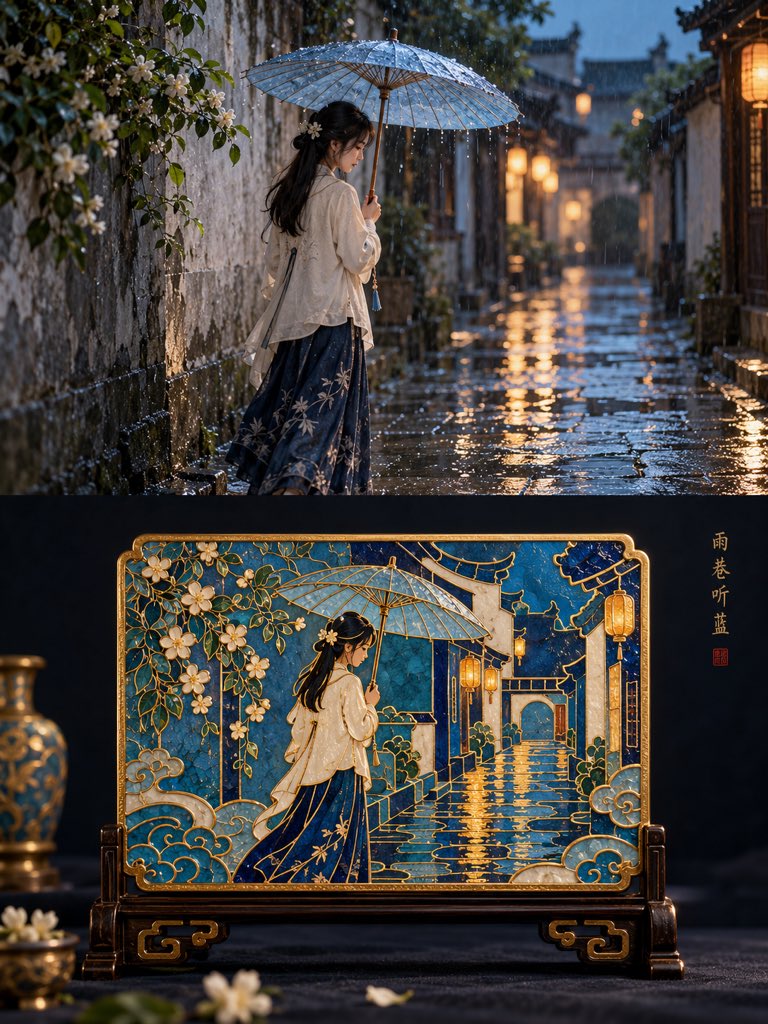
Please turn every photo I upload into a separate high-end design poster, no multi-image stitching, each photo output individually. The overall composition uses a 3:4 vertical orientation, with the upper and lower areas strictly at a 1:1 height ratio, each occupying 50% of the frame.

The upper part preserves the original photo, maintaining the subject's identity, structure, posture, real texture, natural light and shadow, and original color atmosphere, with only slight high-end color grading to give it an artistic photography and Oriental exhibition image texture. To adapt to the frame, the environment background can be naturally extended, but the subject must not be stretched, distorted, or changed.

The lower part extracts the most recognizable subject, silhouette, posture, and narrative relationship from the photo, reconstructing it as a decorative pattern on a traditional Chinese cloisonné (Jingtailan) object, presented on a warm bronze-based enamel table screen or a circular enamel plaque. Whether the original image is of a person, animal, building, plant, object, or landscape, it is understood as a "pattern that can be wired, dotted with blue, and fired": the silhouette and internal structure of the subject are outlined by narrow gilded copper wires, forming closed small cells (cloisons), with each cell filled with enamel glazes of different colors. The posture is taken from the most expressive moment in the original photo, as if permanently frozen beneath the glazed surface.

Do not use realistic depiction or cartoonization; instead, re-summarize using the stylistic grammar of cloisonné: linearized, flattened, and patterned, with gold wires outlining the silhouette, and traditional patterns such as interlocking lotus, fret patterns, ruyi clouds, and sea-and-cliff patterns as local decorations or background fillers. Retain the most recognizable features of the original object, so the viewer recognizes it at a glance, while feeling it was meticulously wired and fired by an old craftsman.

Craftsmanship and luster are the soul of this work: the gilded copper wires emit soft and clear golden highlights under the light, like a dense golden skeleton; the enamel glaze surface, after multiple firings and polishings, presents a glass-like warm translucent luster, with slight transitions in glaze color depth, tiny bubbles, and manual traces visible. The glaze color is based on the iconic peacock blue/azure blue of cloisonné, accented with coral red, sapphire blue, peacock green, ivory white, and goose yellow. A beam of side-lit warm light shines obliquely on the surface of the object, creating exquisite light and shadow undulations between the gold wires and the glaze, with soft reflections at the edges, like a treasure quietly displayed in a museum showcase.

The composition is centered around one object, one pattern, and ample negative space. The enamel plaque or table screen is placed against a dark background (such as deep indigo velvet, ebony lacquer, or warm ink-colored light field), with the surroundings naturally darkening; the main decorative pattern only occupies about 25%–35% of the frame, which can be off-center or located at the golden ratio position. Large areas of clean monochromatic glaze (such as pure azure blue base) are reserved on the object, like the blank space on an artifact, quiet and breathing. No cluttered object displays, redundant props, or full exhibition hall panoramas should appear.

The color palette extracts 2–3 colors with the most emotional value from the photo above, translating them into enamel glaze colors, unified and coordinated with the main cloisonné tone; shadows use deep indigo and warm ink colors instead of cold black; gold is used only for copper wires and object frames, restrained and precise.

A small amount of text may be involved, written in a corner of the frame as small vertical characters for an "object name" or a short phrase, referring to the carved marks on the bottom of an artifact or a small vermilion seal, quietly resting in the negative space, with no language restriction.

The overall presentation is a visual of craftsmanship composed of gilded filigree, glass glaze luster, cloisonné colors, side-light texture, and Oriental negative space. The core principle is: to fire the protagonist of the photo into a piece of enamel, letting it be treasured for a thousand years between the gold wires and glaze colors. Avoid complete realism, overcrowded patterns, cheap "Guochao" style, plastic textures, cheap 3D rendering looks, cartoonishness, and templated posters.